
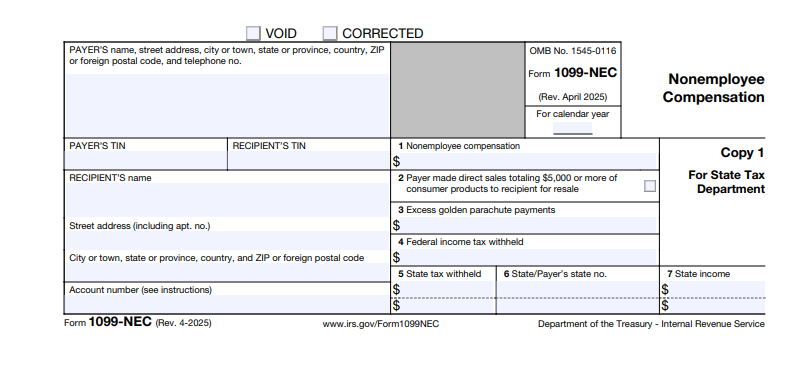
There’s a lot more to payroll if your business outsources freelancers, contractors, or service providers. Perhaps you run a business that mostly pays contractors outside of your typical employees. If so, you’ve probably heard the term “1099”. You may also be wondering if you’re doing it correctly. There are many rules and requirements that are often misunderstood.
Here is a plain breakdown of what 1099s are, when they’re required, and how to avoid mistakes when issuing them.
What Is a 1099?
A 1099 is an IRS form that is used to report payments made by a business to someone who is not an employee. This could be any sort of contractor or freelancer you pay to have work done. There are 2 common forms: 1099-NEC and 1099-MISC. While they both fall under the same category, they have their own purposes.
Simply, issuing a 1099 tells the IRS that you paid someone for work, but they are not an employee on your payroll.
Who Needs to Issue a 1099?
This is where most employers and business owners get confused. There are very specific requirements on issuing a 1099 to someone. Misclassifying them can lead to penalties — so it’s important to get it correct the first time.

A business needs to issue a 1099 if all of the following is true:
- The payment was made while running a business
- The payment was for a service (not goods or products)
- Total payments were $600 or more throughout the year
- The person was not an employee
- The payment was made by check, ACH, wire, or cash
If one or more of these conditions aren’t met, a 1099 isn’t required.
If you pay someone using a credit card or third-party platform, the payment processer reports the income to the IRS on a 1099-K — specific to the finance company. If you make a payment this way, you do not issue a 1099 or duplicate the reporting.
Who Does Not Receive a 1099
If any of the following points apply, 1099s are not required:
- Payments to corporations (C corps and S corps), with limited exceptions
- Payments made via credit card, PayPal, Stripe, or other similar platforms
- Purchases of products or inventory
- Personal payments (non-business such as babysitting or house cleaning)
One exception to keep in mind: attorneys generally receive 1099s even if they are incorporated in a business. This is the only odd specification.
Employee vs. Contractor
While they sound similar, a 1099 doesn’t replace payroll.
If someone:
- Works set hours
- Is trained and supervised
- Uses your systems and softwares
- Performs core business funcations
They are legally an employee, even if they are paid commission. In this case, your employees receive W-2s, not 1099s. Misclassification is one of the most common issues that small businesses encounter.
Collect Contractor W-9
Besides obtaining a contract and basic information from a contractor or freelancer, you’re going to need to obtain a W-9. This form provides their:
- Legal name
- Entity type
- Tax ID number
- Address
Collecting this information avoids problems filing at tax time and ensures accurate reporting.
Stay Up To Date
If your business pays anyone outside of payroll, 1099s are not optional. Understanding who needs one, who doesn’t and why they’re required helps avoid problems in the future. If you’re still unsure whether your business is handling 1099s correctly, it’s worth reviewing your payment structure before the end of the year, not after. Taking a few minutes to confirm how vendors are paid and classified can save time, corrections, and unnecessary stress when filing deadlines approach.


Leave a Reply