
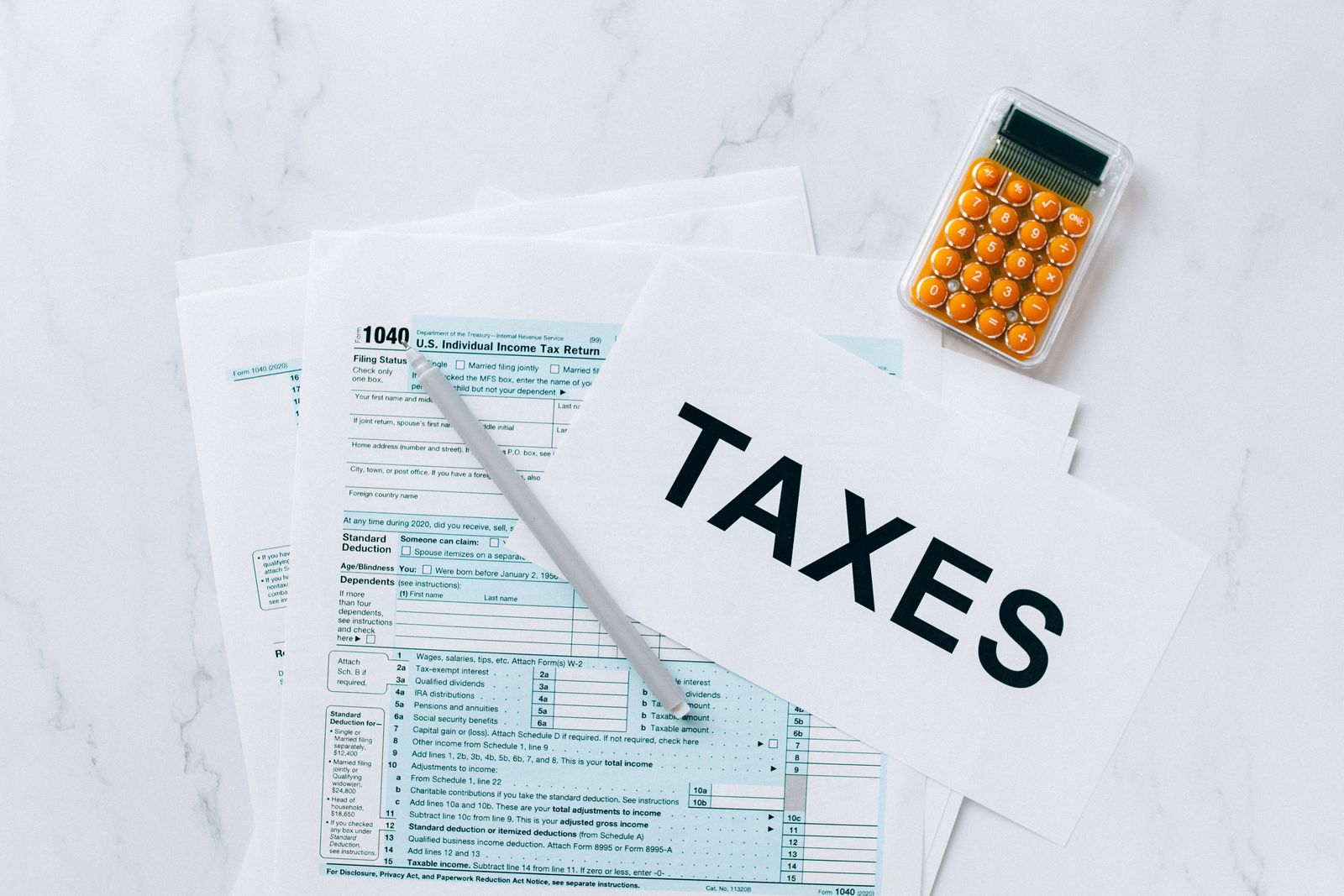
Is your IRS balance higher than the tax shown on your return? The gap usually comes from four additions: the failure-to-file penalty, the failure-to-pay penalty, the estimated tax penalty, and interest that compounds daily. This guide explains how each one is calculated, how to match the IRS figure to your account transcript, and when to ask the IRS to remove a penalty.
The tax on your return is only the starting point
Your return reports the tax you owe for the year. The IRS records that amount as the assessed tax. Penalties and interest are then added under separate sections of the Internal Revenue Code. They keep growing until the full balance is paid, so the amount on a notice is often larger than the amount on your Form 1040.
Failure-to-file penalty, IRC 6651(a)(1)
This penalty applies when a return is filed after its due date, including extensions. Under IRC 6651(a)(1), it equals 5 percent of the unpaid tax for each month or part of a month the return is late. It stops at 25 percent. The base is the tax required on the return, less timely payments and credits.
A minimum penalty applies when an income tax return is more than 60 days late. The minimum is the lesser of a set dollar amount or 100 percent of the tax due. Per Rev. Proc. 2024-40, the amount is $525 for returns required to be filed in 2026. Per Rev. Proc. 2025-32, it rises to $535 for returns required to be filed in 2027.
Failure-to-pay penalty, IRC 6651(a)(2)
This penalty applies to tax not paid by the original due date. The IRS failure-to-pay page sets it at 0.5 percent of the unpaid tax per month or part of a month, up to 25 percent. Unlike the filing penalty, it keeps running after you file.
Two rules change the monthly rate. If an individual filed on time and has an approved installment agreement, the rate drops to 0.25 percent per month. If the tax is still unpaid 10 days after a notice of intent to levy, the rate rises to 1 percent per month.
The combined month rule
Both penalties can apply in the same month. When they do, the IRS reduces the failure-to-file penalty by the failure-to-pay amount for that month, as IRC 6651(c)(1) requires. In practice, the two together cost 5 percent per month, split 4.5 percent and 0.5 percent.
Estimated tax penalty, IRC 6654
Self-employed people and investors usually pay tax in quarterly installments. If those payments were too small or too late, IRC 6654 adds a penalty. The IRS estimated tax penalty page says it depends on the amount underpaid, how long it was underpaid, and the quarterly interest rate. You generally avoid it if you owe less than $1,000, or paid 90 percent of this year’s tax or 100 percent of last year’s tax. That 100 percent becomes 110 percent for higher incomes. Form 2210 computes the penalty or requests a waiver. Our guide on how to avoid quarterly estimated tax penalties covers planning.
Interest, IRC 6601, 6621, and 6622
Interest runs on unpaid tax from the original due date until payment, under IRC 6601. IRC 6621 sets the rate at the federal short-term rate plus 3 percentage points for individuals. IRC 6622 makes it compound daily. The IRS set the rate at 7 percent for October 1 to December 31, 2026. The quarterly rate table shows 6 percent for April to June 2026. The IRS had not announced the rate for January to March 2027 when this article was written.
Interest also runs on penalties. Interest on the failure-to-file penalty starts at the return due date. Interest on most other penalties, including failure to pay, starts if they remain unpaid 21 days after the IRS bills them.
A simplified example: $10,000 owed, return filed 3 months late
This example is hypothetical and simplified. A taxpayer owes $10,000 on a 2025 Form 1040 due April 15, 2026. No extension was filed and nothing was paid early. The return and full $10,000 payment arrive on July 10, 2026, which counts as 3 months late. Assume no estimated tax penalty and no penalty relief.
- Failure-to-pay penalty: 0.5 percent x 3 months x $10,000 = $150.
- Failure-to-file penalty: 5 percent x 3 months = $1,500, reduced by the $150 failure-to-pay penalty = $1,350. This exceeds the $525 minimum, so the minimum does not apply.
- Interest on the tax: about $145, at 6 percent for 76 days and 7 percent for 10 days, compounded daily.
- Interest on the failure-to-file penalty from April 15: about $20.
The taxpayer paid the $10,000 shown on the return. A notice still arrives for about $1,665. That remaining balance keeps accruing interest, and failure-to-pay penalty on any unpaid tax, until it is paid.
Is your IRS balance higher than expected? Check the transcript
An account transcript lists every posted charge and credit for one tax year. You can view it free in your IRS Individual Online Account under Records and Status. The IRS notes that a transcript may not show the most recent penalties, interest, or pending actions. Each line carries a transaction code, a three-digit label for the type of entry. Common codes, per IRS Document 6209, include:
- 150: return filed and tax assessed.
- 160 or 166: failure-to-file (delinquency) penalty, manual or computer-generated.
- 270 or 276: failure-to-pay penalty, manual or computer-generated.
- 176: estimated tax penalty, computer-generated.
- 196: interest assessed.
- 161, 167, 271, 277, 177, 197: abatements, which reverse the matching charges.
To reconcile, start with code 150 and subtract your payments. Add each penalty and interest line, then subtract any abatements. The Internal Revenue Manual says the transcript also shows a balance due with accruals. Accruals are interest and penalties earned since the last assessment but not yet posted. If a gap remains, look for a payment applied to another tax year or a credit that has not yet posted.
When to request penalty abatement
Abatement means the IRS removes a penalty already charged. There are two main routes for filing and payment penalties.
- First-time abatement. The IRS administrative relief page requires timely filed returns of the same type for the prior 3 years and no penalties in that period, other than the estimated tax penalty. It covers failure-to-file, failure-to-pay, and failure-to-deposit penalties. See our first-time penalty abatement guide.
- Reasonable cause. The IRS reasonable cause page lists examples such as natural disasters, serious illness or death, inability to get records, and system failures that delayed filing or payment.
The IRS is also starting an Automatic Exemption from Penalty for 2025 tax year returns, beginning summer 2026. It applies to taxpayers who filed and paid on time for the 3 prior years. Under it, eligible failure-to-file and failure-to-pay penalties are never assessed. Check your transcript before asking for relief that may already apply.
You can request relief by calling the number on your notice. You can also file Form 843, Claim for Refund and Request for Abatement, as explained in our Form 843 guide. Interest is different. The IRS removes interest automatically when it removes the related penalty. According to the Taxpayer Advocate Service, interest on the tax itself is reduced only for unreasonable IRS error or delay, not for reasonable cause.
How Acully Tax can help
Acully Tax reviews your IRS account transcripts, reconciles the balance line by line, and prepares penalty abatement requests and IRS correspondence. If a notice does not match your return, book a consultation with Acully Tax before you pay or respond.
Sources
- 26 U.S.C. 6651, Failure to file tax return or to pay tax, accessed November 10, 2026.
- 26 U.S.C. 6601, Interest on underpayment, accessed November 10, 2026.
- IRS, Failure to file penalty, updated October 5, 2026.
- IRS, Failure to pay penalty, updated October 23, 2026.
- IRS, Rev. Proc. 2024-40, section 2.53, 2024.
- IRS, Rev. Proc. 2025-32, section 4.52, 2025.
- IRS, Underpayment of estimated tax by individuals penalty, updated August 20, 2026.
- IRS, IR-2026-98, Interest rates remain the same for the fourth quarter of 2026, August 21, 2026.
- IRS, Quarterly interest rates, updated September 10, 2026.
- IRS, Online account for individuals FAQs, updated August 19, 2026.
- IRS, Document 6209, Section 8A, Master File codes, accessed November 10, 2026.
- IRS, IRM 21.2.3, Transcripts, effective October 1, 2026.
- IRS, Penalty relief due to first time abate or other administrative waiver, updated October 22, 2026.
- IRS, Penalty relief for reasonable cause, updated June 21, 2026.
- Taxpayer Advocate Service, Why do I owe a penalty and interest, May 18, 2026.
This article is for general information only and is not tax or legal advice. Consult a qualified tax professional about your situation.


Leave a Reply