
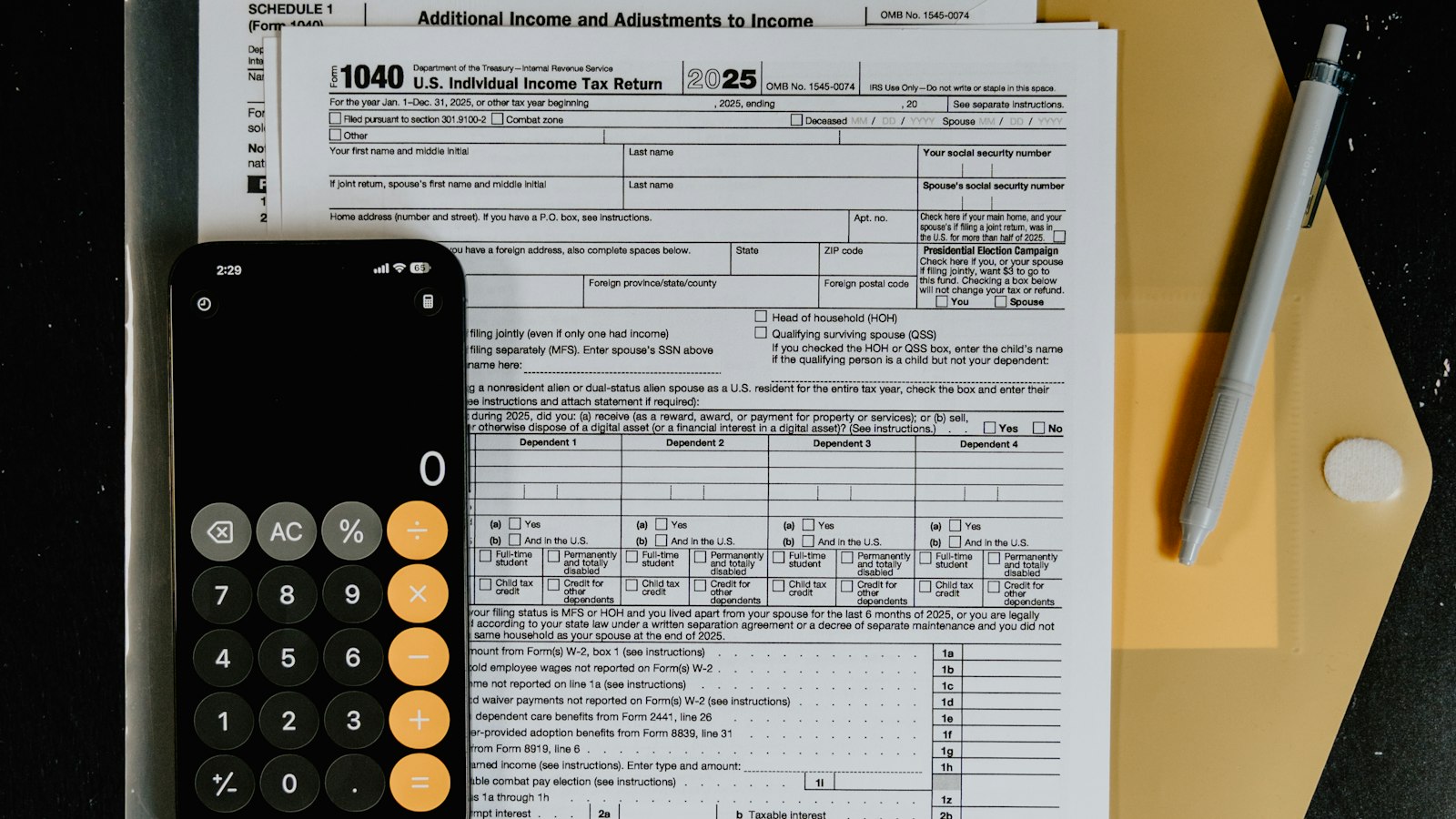
A corporate estimated tax penalty measures when you paid, not whether your tax figure was correct. A corporation that pays most of its tax with the return can owe penalty charges even when the return is accurate and no tax changes. This guide explains why a state or IRS notice adds these charges, how to check the figures, and how to plan 2027 installments, starting with the December 15, 2026 federal payment.
Why a correct return can still produce a notice
Federal and state tax systems expect corporations to pay as they earn. The tax is due in four installments during the year, not in one payment with the return.
The penalty works like interest on each late installment. The Instructions for Form 2220 state that a corporation may owe a penalty for an earlier due date “even if it paid enough tax later to make up the underpayment.” The instructions add that this is true “even if the corporation is due a refund when its return is filed.”
A notice that shows penalty and interest with no change to tax often reflects this calculation. The tax on the return stands. The charge reflects the months the money was unpaid.
Federal rules for the corporate estimated tax penalty
The federal penalty comes from IRC section 6655. A corporation generally must make estimated payments if it expects to owe $500 or more for the year, according to IRS Publication 542.
Installment due dates
Installments are due on the 15th day of the 4th, 6th, 9th, and 12th months of the tax year. For a calendar-year corporation, the dates are April 15, June 15, September 15, and December 15. A due date on a weekend or legal holiday moves to the next business day.
December 15, 2026 falls on a Tuesday. It is the fourth 2026 installment for calendar-year corporations.
How much each installment must be
Each installment is 25 percent of the required annual payment. Under section 6655(d), that payment is the smaller of two amounts.
- 100 percent of the tax shown on the current-year return.
- 100 percent of the tax shown on the prior-year return.
The prior-year option has conditions. The prior year must cover 12 months and the return must show some tax.
Large corporations face a stricter rule. A large corporation had taxable income of $1 million or more in any of the 3 prior tax years, under section 6655(g)(2). It may use the prior-year amount only for the first installment. Any shortfall from that choice is added to the second installment.
Methods that lower early installments
Corporations with uneven income can use the annualized income installment method or the adjusted seasonal installment method. Both are computed on Schedule A of Form 2220. A corporation that uses either method must attach Form 2220 to its return.
How the IRS figures the charge
The penalty uses the underpayment rate under IRC section 6621. That rate is the federal short-term rate plus 3 percentage points. IRS release IR-2026-98 set the rate at 7 percent for the fourth quarter of 2026.
The charge runs from each installment due date until the earlier of the payment date or the 15th day of the 4th month after year-end. For a calendar-year 2026 C corporation, that end date is April 15, 2027.
The IRS will compute the penalty and send a bill if Form 2220 is not attached. The IRS penalty page states that the IRS cannot adjust this penalty for reasonable cause. Relief is limited to narrow cases, such as tax under $500 or reliance on incorrect written IRS advice.
A hypothetical example
Assume a calendar-year C corporation owes $40,000 of 2026 federal tax. It paid nothing during the year and pays the full $40,000 on April 15, 2027. Its 2025 return showed no tax, so only the current-year amount applies.
Each installment should have been $10,000. Using a flat 7 percent rate, the penalty on each installment is approximately as follows.
- April 15, 2026 installment, 365 days late. $700.
- June 15, 2026 installment, 304 days late. $583.
- September 15, 2026 installment, 212 days late. $407.
- December 15, 2026 installment, 121 days late. $232.
The total is about $1,922, with no change to the $40,000 tax. Actual rates change each quarter. The second quarter 2026 rate was 6 percent, according to the IRS quarterly interest rates page.
How state rules differ
Each state sets its own installment rules. Two large states show how much the rules can vary.
California
California requires uneven installments. The 2026 Instructions for Form 100-ES set them at 30 percent, 40 percent, 0 percent, and 30 percent of estimated tax. A corporation subject to the $800 minimum franchise tax pays the full $800 by the first installment date if its tax will not exceed the minimum.
California does not follow the federal prior-year rule. The Franchise Tax Board states that “for California purposes, the application of the penalty is based on current year tax only.” The penalty is figured on Form FTB 5806.
New York
New York starts earlier. A C corporation that expects tax over $5,000 must pay a mandatory first installment with Form CT-300 by the 15th day of the 3rd month of the tax year, according to the 2026 Instructions for Form CT-300. The amount is 25 percent of the second preceding year’s tax, or 40 percent if that tax exceeded $100,000.
The remaining installments go on Form CT-400 in the 6th, 9th, and 12th months. The Instructions for Form CT-222 state that “New York State will calculate the amount of any penalty.”
How to read the notice
Check four items before you pay.
- The tax figure. Confirm that it matches your filed return.
- The payment dates. Compare each payment the notice credits with your bank records.
- The installment schedule. Confirm the state used the correct percentages and due dates.
- The exceptions. Ask whether an annualized or seasonal method would lower the charge.
If a payment is missing, send proof of payment. The IRS penalty page allows a corporation to send Form 2220 with a signed letter confirming that its payments are accurate. Our posts on checking a state corporate tax assessment and on a state tax notice in the first 30 days cover the response steps.
Plan 2027 installments now
Federal 2027 installments for a calendar-year corporation fall on April 15, June 15, September 15, and December 15, 2027. None of these dates falls on a weekend.
Use the estimated tax worksheet in Publication 542 to set the amounts. The IRS now calls Form 1120-W “historical,” so do not rely on an old copy of that form.
Pay electronically. Publication 542 states that corporations “must generally use EFTPS to make deposits of all tax liabilities.” The IRS EFTPS page notes that a new enrollment can take up to 5 business days. Our post on EFTPS estimated tax payments before December 15 walks through scheduling a payment.
Set state installments on the state’s own calendar. California applies 30 percent, 40 percent, 0 percent, and 30 percent. New York requires its first installment in March for a calendar-year filer.
How Acully Tax can help
Acully Tax reviews corporate penalty notices, checks the payment history against your records, and prepares Form 2220 when an annualized or seasonal method lowers the charge. We also set federal and state installment schedules for 2027. Contact Acully Tax to book a consultation before the December 15 payment.
Sources
- IRC section 6655, law.cornell.edu, accessed November 21, 2026.
- IRC section 6621, law.cornell.edu, accessed November 21, 2026.
- IRS, 2025 Instructions for Form 2220, irs.gov, accessed November 21, 2026.
- IRS, 2025 Form 2220, irs.gov, accessed November 21, 2026.
- IRS, Underpayment of Estimated Tax by Corporations Penalty, irs.gov, reviewed November 5, 2026.
- IRS Publication 542 (Rev. January 2024), Corporations, irs.gov, accessed November 21, 2026.
- IRS, IR-2026-98, Interest rates for the fourth quarter of 2026, irs.gov, August 21, 2026.
- IRS, Quarterly interest rates, irs.gov, updated September 10, 2026.
- IRS, EFTPS, irs.gov, updated November 10, 2026.
- California Franchise Tax Board, 2026 Instructions for Form 100-ES, ftb.ca.gov, accessed November 21, 2026.
- New York State Department of Taxation and Finance, 2026 Instructions for Form CT-300, tax.ny.gov, accessed November 21, 2026.
- New York State Department of Taxation and Finance, Instructions for Form CT-222, tax.ny.gov, accessed November 21, 2026.
This article is for general information only and is not tax or legal advice. Consult a qualified tax professional about your situation.


Leave a Reply