
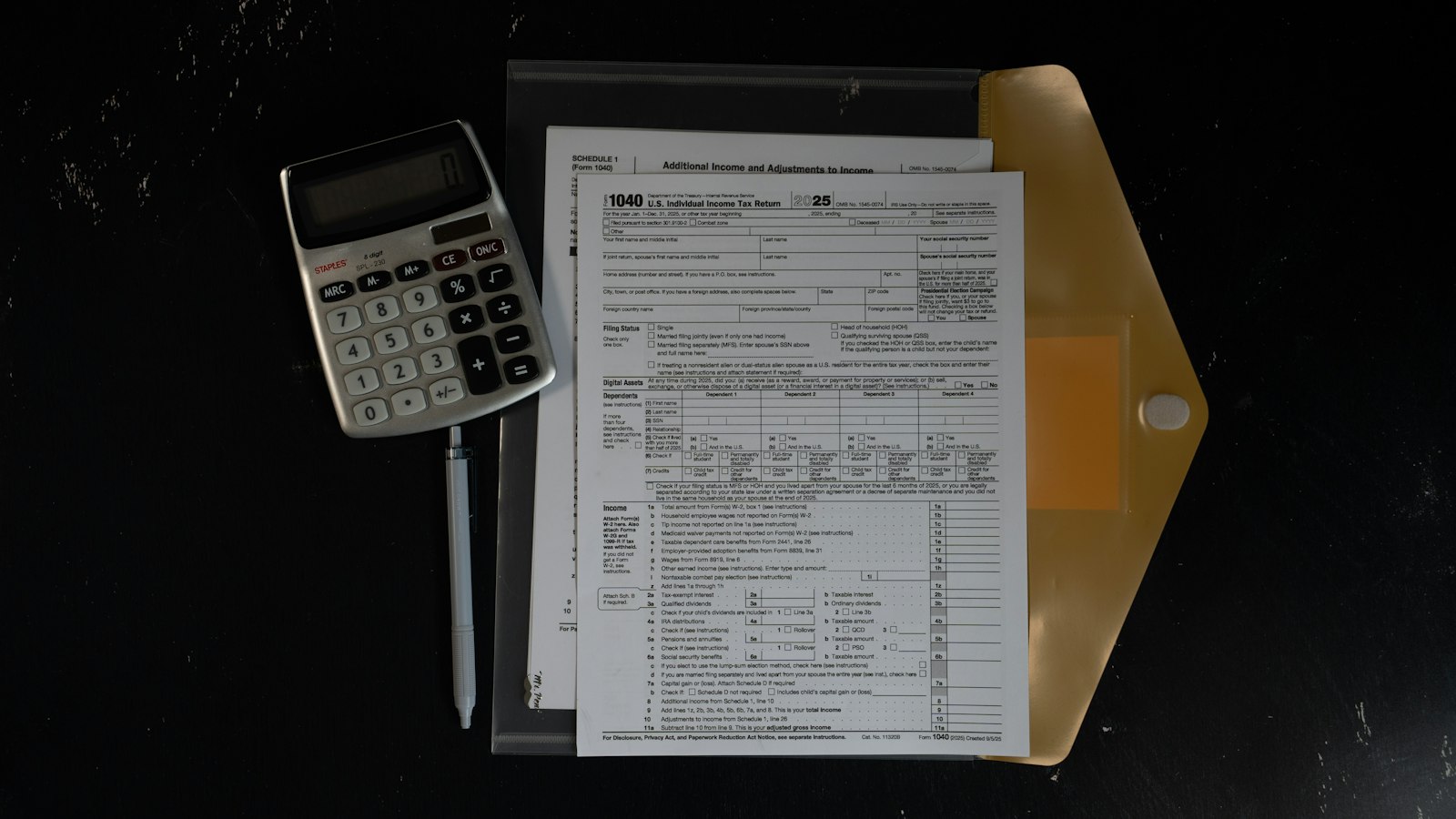
This guide explains when the Taxpayer Advocate Service can help with an IRS problem, what Form 911 asks for, and what happens after you submit it. It also lists the case types the Taxpayer Advocate Service (TAS) is not accepting as of October 2026, so you can judge whether a request is worth filing now.
What the Taxpayer Advocate Service is
TAS is an independent organization within the IRS. According to IRS Tax Tip 2024-77, its service is free. TAS has offices in every state, the District of Columbia, and Puerto Rico. Its toll-free number is 877-777-4778.
TAS is not a first stop. It helps taxpayers resolve problems they have not been able to resolve with the IRS through normal channels. Contact the IRS office named on your notice first, and keep a record of each call and letter.
When the Taxpayer Advocate Service can help
The TAS page Can TAS help me with my tax issue? lists nine reasons for accepting a case. They fall into three groups.
- Financial hardship (reasons 1 to 4): you face or are about to face financial hardship, an immediate threat of negative action, major costs if relief is not granted, or irreparable injury or long-term impact.
- IRS system issues (reasons 5 to 7): a delay of more than 30 days to resolve an account problem, no response by the date the IRS promised, or an IRS system or procedure that failed to work as intended.
- Fair and equitable treatment (reasons 8 and 9): the way the IRS applies the law raises equity concerns or impairs your taxpayer rights, or the National Taxpayer Advocate finds a compelling public policy reason to help.
These reasons track IRC section 7811. That section lets the National Taxpayer Advocate issue a Taxpayer Assistance Order when a taxpayer suffers or is about to suffer a significant hardship. A Taxpayer Assistance Order is a formal directive that can require the IRS to take, stop, or refrain from an action. The statute names four hardship factors: an immediate threat of adverse action, a delay of more than 30 days, significant costs including professional fees, and irreparable injury.
Two hypothetical examples show the line. A business owner receives an IRS letter promising a reply within 60 days and hears nothing after 90 days. That fits reason 6. A levy on a business bank account would leave the company unable to meet next week’s payroll. That fits reasons 1 and 2. Our post on what to do when you receive mail from the IRS covers the steps before TAS.
Cases TAS is not accepting right now
TAS has narrowed its intake because of IRS processing delays. Its case acceptance page, last modified July 30, 2026, lists these exclusions:
- Paper-filed income tax returns for tax year 2025 or earlier that the IRS has not processed. TAS waits 60 days after the IRS shows receipt before it accepts these cases.
- Returns filed before January 1, 2025, where the IRS stopped the refund through income verification or asked for more documents.
- Tax year 2025 returns with a stopped refund or a document request. The page states that TAS will begin accepting these cases after October 31.
- Returns filed in 2026 with a held refund because direct deposit details were missing or wrong, where the taxpayer wants a paper check.
TAS still accepts electronically filed returns with processing delays that meet its criteria. It also accepts processed returns for tax year 2025 or earlier where the IRS made adjustments and mailed a notice.
What Form 911 asks for
Form 911, Request for Taxpayer Advocate Service Assistance (And Application for Taxpayer Assistance Order), is the written request for help. The current version is Rev. 6-2026. It has two sections.
Section I: taxpayer information
Section I asks for your name and taxpayer identification number (SSN, ITIN, or EIN), plus your spouse’s details for a joint return. It also asks for your address, phone, email, and preferred contact method. You then name the tax form and tax period, describe the issue, and state the relief you want on line 12b. You and any joint filer sign on lines 13 and 14.
Section II: third party information
Part A is for a representative authorized on Form 2848, Power of Attorney. Part B is for a designee authorized on Form 8821, Tax Information Authorization. Each part asks for the third party’s name, CAF number, contact details, and signature. Attach a copy of the authorization. A Form 8821 designee can receive information but cannot advocate your position.
Tips from the form instructions
- If the IRS has delayed more than 30 days, give the date you first contacted the IRS.
- Attach supporting documents. The form states this may lead to a quicker resolution.
- Do not submit more than one Form 911 for the same issue. Duplicates may cause delays.
- Do not raise frivolous arguments. TAS will not consider them, and a $5,000 penalty may apply.
How to submit Form 911
The TAS page Submit a request for assistance lists three methods. Email the form to TAS.Form.911.Request.for.Assistance@irs.gov. Fax it to 855-828-2723. Or mail it to the TAS address in Florence, Kentucky, printed on the form. Taxpayers abroad can fax 304-707-9793, which is not toll-free.
Email submissions are not encrypted. If that is a concern, fax or mail the form. Send only Form 911 and its supporting documents, not other IRS forms.
What to expect after you file
A TAS employee will contact you by phone or letter. If you hear nothing within 30 days, email the same address with “No Response” in the subject line. The TAS FAQ states that resolution can take a couple of weeks to a couple of months.
Filing Form 911 does not pause your own deadlines. The form states that it does not suspend the time to petition the Tax Court or to request a Collection Due Process hearing. Keep meeting every deadline on your notices while TAS works the case. Your rights during this process are summarized in our post on the IRS Bill of Rights.
If the underlying problem is a penalty, TAS may not be the fastest route. A penalty relief request filed directly with the IRS, such as Form 843, may address it sooner. See our post on penalty abatement with Form 843.
Get help with an IRS problem from Acully Tax
Acully Tax handles IRS correspondence, penalty abatement, and complex noncompliance cases through its specialty services. With a signed Form 2848, we can contact the IRS and TAS on your behalf and prepare Form 911 when a case qualifies. See our services for individuals and businesses, then contact Acully Tax to discuss your notice.
Sources
- IRS, Form 911 (Rev. 6-2026).
- Taxpayer Advocate Service, Can TAS help me with my tax issue?, accessed October 28, 2026.
- Taxpayer Advocate Service, Case acceptance updates, last modified July 30, 2026.
- Taxpayer Advocate Service, Submit a request for assistance, accessed October 28, 2026.
- Taxpayer Advocate Service, Frequently asked questions, accessed October 28, 2026.
- IRS, Tax Tip 2024-77: Taxpayer Advocate Service, a taxpayer’s voice at the IRS, September 12, 2024.
- Internal Revenue Code section 7811, Taxpayer Assistance Orders.
This article is for general information only and is not tax or legal advice. Consult a qualified tax professional about your situation.

Leave a Reply